Grading
Rules need context
Student experience can reveal where a policy’s assumptions do not match reality.
Story · Student voice + public systems
Early advocacy around grading, Safe Passage, and school phone policy became a practical education in stakeholders, implementation, and the difference between being heard and changing how a system works.
01 · Origin
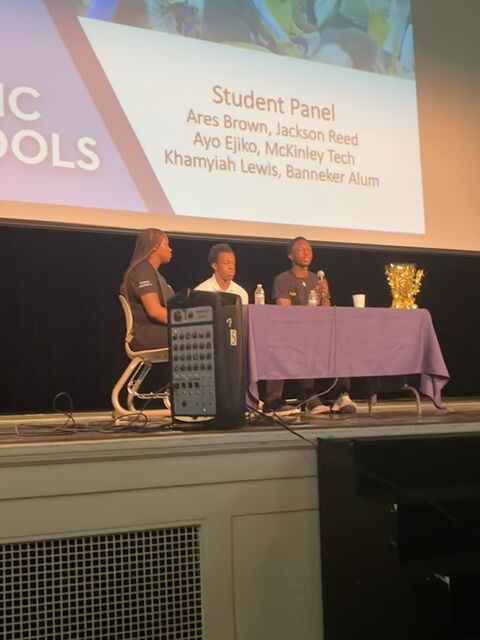
During and after the pandemic, questions about grading, safe travel to school, and phone rules were not abstract. They shaped students’ daily ability to learn, participate, and feel supported. Through student-voice spaces, I worked with peers and adult partners to raise those concerns and discuss how proposed changes would work in school.
02 · Progression
Three fights and one throughline: each issue looked different on the surface but was teaching the same lesson about how systems actually move.
Grading
Student experience can reveal where a policy’s assumptions do not match reality.
Safe Passage
A strong idea still depends on coordination, trust, visibility, and how people experience it on the ground.
Phone policy
Instruction, safety, discipline, equity, family access, and feasibility all belong in the same conversation.
Next chapter
Later DCPS and research work connected lived experience with data, governance, and decision processes.
03 · Working method
The same concern had to be said differently to a classmate, a teacher, and a school-board member without becoming a different concern. Four habits made that possible.
Understand what students, educators, families, and policymakers each need to hear.
Avoid simple solutions when implementation affects people differently.
Credit the peers, educators, advocates, and public leaders who move work forward together.
Treat adoption, communication, and follow-through as part of the work.
04 · Bridge to later work
The same pattern now appears in DCPS belonging analysis, DC Education Research Collaborative advising, policy writing, Accenture governance work, and community leadership. The subject changes, but the questions remain: Who is affected? Who decides? What evidence counts? What will make the system usable?
05 · Collaboration