Publicly described work
Analyzed Panorama survey data, supported Culture Institute design and logistics, and contributed to systems for shared student-adult leadership.
Case study · Education data + public systems
A confidentiality-aware overview of how large-scale survey evidence, student voice, and stakeholder context supported planning conversations at DC Public Schools.
01 · The question
District survey data can surface patterns that individual anecdotes cannot, but the numbers still need context. The work connected Panorama survey analysis with conversations about culture, equity, student voice, and how adults and students share responsibility for school climate.
02 · My contribution and boundaries
Analyzed Panorama survey data, supported Culture Institute design and logistics, and contributed to systems for shared student-adult leadership.
School-level results, respondent information, internal dashboards, district recommendations, and any sensitive stakeholder context.
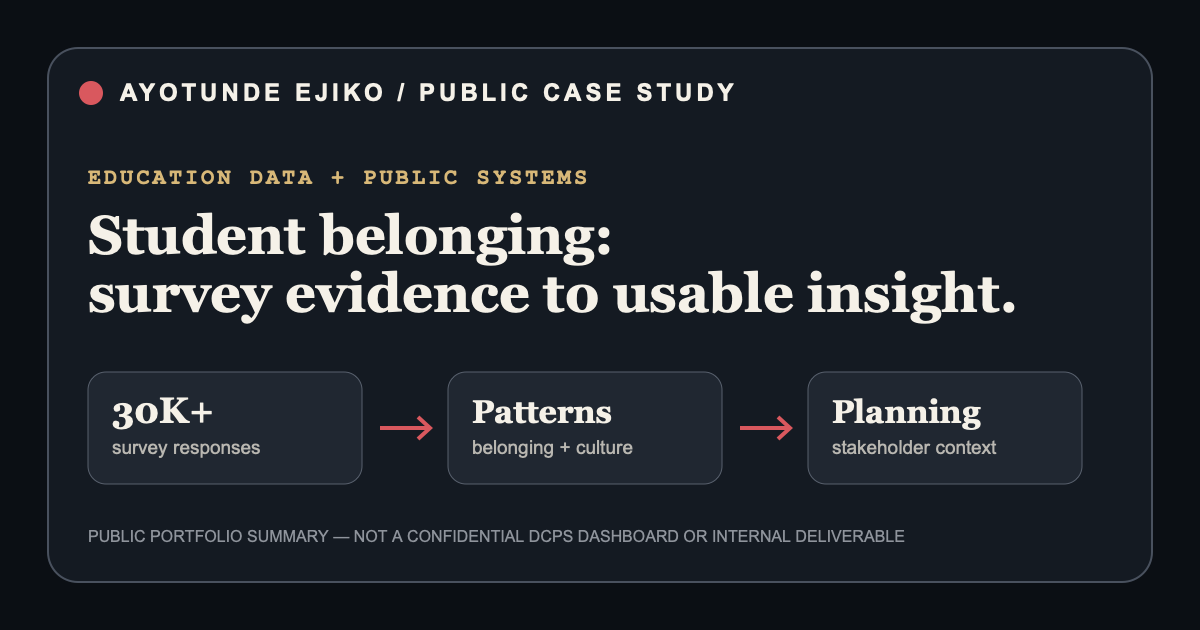
03 · Evidence flow
04 · Working approach
Frame
Clarify which belonging and culture decisions the analysis should help stakeholders discuss.
Analyze
Review survey results for themes and differences that warrant closer contextual interpretation.
Interpret
Use student voice and human-centered thinking to keep meaning attached to the metrics.
Support
Help make the evidence usable in Culture Institute and shared-leadership conversations.
05 · Contribution
Used survey evidence to surface belonging themes relevant to district planning.
Translated analysis into language that could support conversation outside an analytics team.
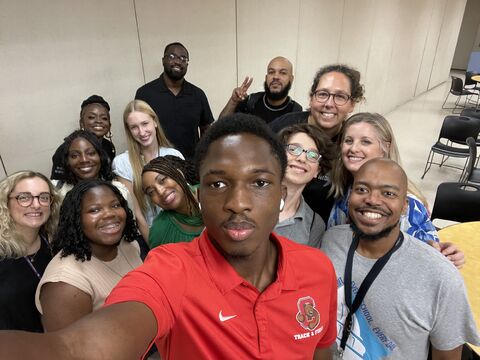
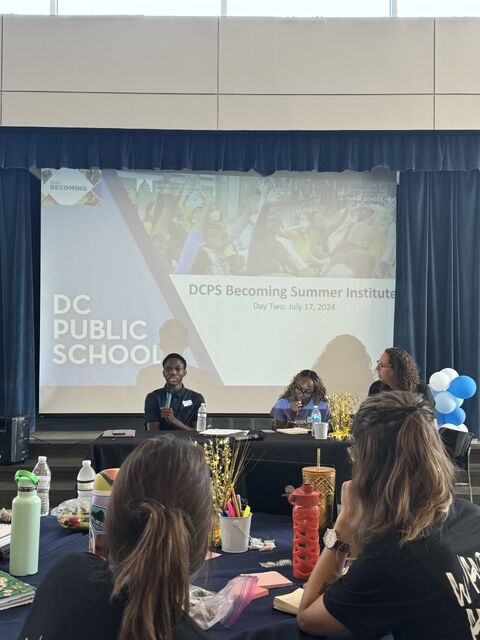
Contributed to Culture Institute design and logistics alongside the analytical work.
Supported structures intended to strengthen collaboration between students and adults.
06 · Limits
07 · What this work shaped
The experience reinforced a direction that now appears across the portfolio: combine analytical evidence with the people, institutions, and implementation conditions that determine whether an insight becomes useful.